
Last Updated: October 26, 2026
Quick Summary
Regenerative therapy for chronic back pain uses your body’s own cells or growth factors to support tissue repair in the spine, helping damaged discs and joints heal rather than just masking pain. It is not surgery and not a cure-all, and whether it helps depends on your diagnosis, your tissue damage, and how you measure success.
- Chronic low back pain lasts three months or longer, and a clear diagnosis must come before any regenerative injection.
- PRP uses your own blood platelets and is generally considered lower risk than cell-based options.
- Cell-based therapy is the category where marketing most often outruns the evidence, so verify regulatory status.
- Regenerative injections are most often discussed for discogenic pain and less suited to nerve compression or stenosis.
- Ask for a written quote and whether the treatment is covered by insurance or out of pocket.
Table of Contents
- What Regenerative Therapy for Chronic Back Pain Actually Involves
- Regenerative Medicine for Chronic Low Back Pain: PRP, Stem Cells, and Disc Damage
- Regenerative Injection Therapy for Back Pain: A Step-by-Step Decision Guide
- Long-Term Results of Regenerative Therapy for Back Pain
- Risks of Regenerative Injections for Back Pain
- Building Your Personal Back Pain Treatment Plan
- Frequently Asked Questions
What Regenerative Therapy for Chronic Back Pain Actually Involves
Regenerative therapy for chronic back pain uses your body’s own cells or growth factors to support tissue repair in the spine. At Beverly Hills Wellness Center, we explain regenerative therapy as a way to help damaged discs and joints heal rather than just mask pain. It is not surgery, and it is not a cure-all. Whether it helps your back depends on your diagnosis, your tissue damage, and how you measure success.
How Regenerative Therapies May Work
Damaged tissue in and around the spine has a limited blood supply, so it heals slowly. Regenerative treatments aim to bring healing factors to that tissue.
- Growth factors signal repair cells to the area
- Cell-based therapy may support new tissue formation
- Inflammation control helps the healing response work better
Many providers describe these as minimally invasive procedures. The evidence is still developing, so treat any clinic that promises guaranteed results with caution.
Chronic Low Back Pain and Possible Causes
Chronic low back pain lasts three months or longer (pubmed.ncbi.nlm.nih.gov). Common causes include:
- Discogenic low back pain from a worn or torn intervertebral disc
- Facet joint irritation
- Muscle and ligament strain
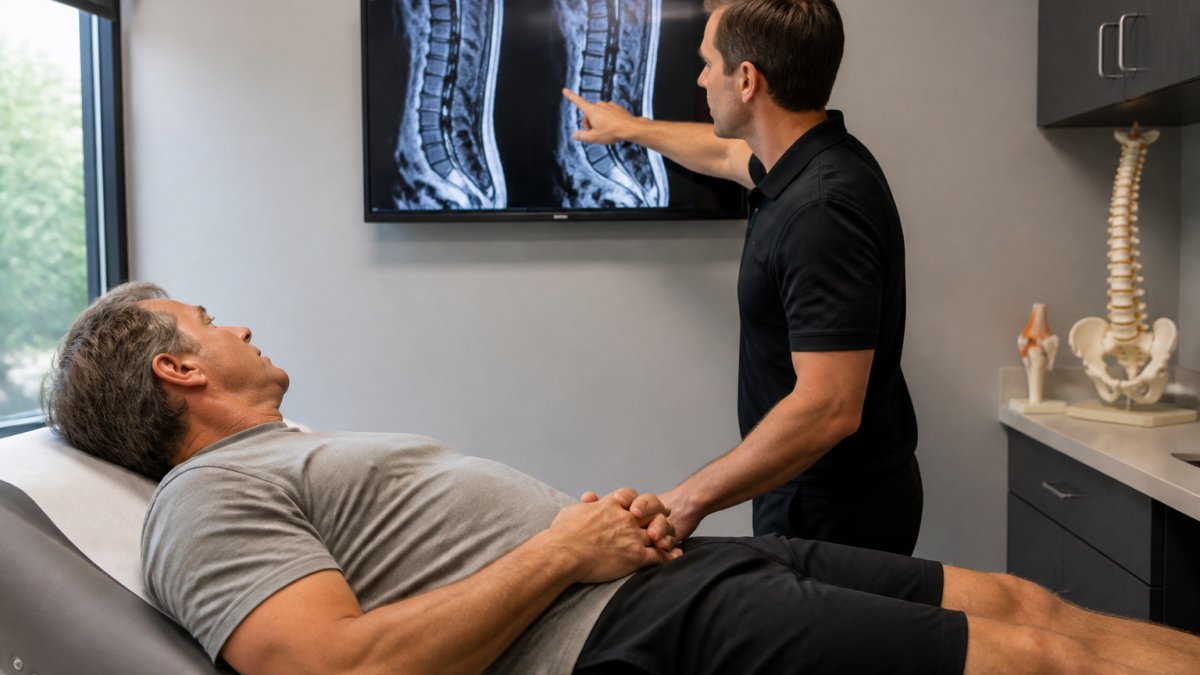
A clear diagnosis comes first. Without one, you cannot judge whether a regenerative injection makes sense for your damaged tissue.
Regenerative Medicine for Chronic Low Back Pain: PRP, Stem Cells, and Disc Damage
Regenerative medicine for chronic low back pain covers distinct treatment types that are not interchangeable, with different evidence, regulatory status, and costs. The most useful skill you can develop as a patient is telling these categories apart before you pay for anything.
Platelet-Rich Plasma (PRP) Therapy
PRP uses a sample of your own blood, concentrates the platelets, and injects them into the damaged area. Platelets release growth factors that may support tissue repair.
What the evidence actually shows: PRP for discogenic low back pain has been studied in small trials and case series, and results are mixed. Some patients report meaningful pain reduction at three to six months; others see little change.
Stem Cell or Cell-Based Therapy
Cell-based therapy uses cells, often mesenchymal stem cells, to support tissue regeneration. This is the category where marketing most often outruns the evidence. In the United States, the FDA’s framework for human cell and tissue products sets strict limits on how these products can be marketed and used. The practical distinction to understand is between:
- Established uses, products regulated as drugs or biologics that have gone through FDA review for a specific indication.
- Investigational applications, uses being studied in clinical trials, where you should expect informed consent, a protocol, and often a registry listing.
- Uses lacking strong evidence, treatments marketed directly to consumers without robust trials or a clear regulatory pathway.
Ask any provider which cells they use, where they come from (your own bone marrow or fat versus donor tissue), how the cells are processed, and how the treatment fits current rules. A clinic that cannot explain its regulatory status in plain language is a warning sign. Verify claims yourself via the FDA’s public pages on cell and tissue products and ClinicalTrials.gov.
Disc and Other Spinal Tissue Damage
Regenerative injections are most often discussed for discogenic pain, pain from a worn, torn, or degenerated intervertebral disc. They are less clearly suited to pain driven by facet joint arthritis, spinal stenosis, or nerve compression, where the problem is mechanical or compressive rather than a matter of tissue repair. The diagnosis, not the product, drives the outcome.
| Treatment | What It Uses | Evidence Status | Regulatory Picture | Best For |
|---|---|---|---|---|
| PRP | Your own blood platelets | Growing, mixed results | Generally regulated as practice of medicine; no FDA approval for back pain | Mild to moderate disc pain |
| Cell-based therapy | Donor or your own cells | Limited, still studied | FDA framework restricts marketing; many uses investigational | Selected disc damage cases, often in trials |
| Steroid injections | Anti-inflammatory drug | Well established | FDA-approved drugs used off-label for back pain | Short-term pain relief |
| Physical therapy | Exercise and manual care | Well established | Licensed practitioners | First-line for most chronic back pain |
The treatment name on the brochure matters less than three things: your specific diagnosis, whether the injection is image-guided, and whether the clinic can explain its evidence and regulatory status without hedging.
Regenerative Injection Therapy for Back Pain: A Step-by-Step Decision Guide
Regenerative injection therapy for back pain is not a first stop. Use this sequence to decide whether it fits your situation.
- Get a clear diagnosis. Ask for imaging and a specific cause, not just “back pain.”
- Try conservative care first. Physical therapy and activity changes remain the foundation.
- Confirm your treatment candidate status. Ask whether your disc damage is the right type and stage.
- Check the provider’s credentials and imaging use. Image-guided injection matters for accuracy.
- Review the evidence for your specific treatment. Ask for clinical studies, not testimonials alone.
- Set measurable goals. Define pain score and functional status targets before you start.
Questions to Ask Before You Pay
Pricing depends on the treatment, the number of injections, and the clinic, so ask for a written quote. Then ask:
SCHEDULE A FREE CONSULTATION →
- Is this covered by insurance, or is it out of pocket?
- How many sessions will I likely need?
- What outcome measures will you track?
Long-Term Results of Regenerative Therapy for Back Pain
Long-term results of regenerative therapy for back pain are the hardest thing to predict: durability of benefit varies. Some patients report pain reduction and better mobility for months; others see little change.
What we watch for is functional improvement, not just a lower pain score. Can you carry groceries? Sit through a workday? Sleep through the night? Those activities tell you more than a single good week.
Risks of Regenerative Injections for Back Pain
Risks of regenerative injections for back pain fall into three buckets: procedure-related, product-related, and decision-related. Most clinic websites only mention the first.
Procedure-Related Risks
Any needle into the spine carries a small risk of:
- Infection at the injection site or, rarely, in the disc space. Sterile technique and single-use equipment are the main safeguards.
- Bleeding or bruising, especially if you take blood thinners, aspirin, or NSAIDs. Most practitioners ask you to pause certain medications for several days before an injection, but only under the prescribing clinician’s direction.
- Temporary pain flare for 24 to 72 hours after the needle. This is common and usually self-limited.
Steroid injections carry known risks with repeated use, including thinning of bone and nearby tissue, elevated blood sugar, and suppression of the body’s own cortisol production, one reason many guidelines limit their frequency.
Product-Related and Regulatory Risks
Cell-based products vary enormously in preparation, and the FDA has warned about clinics marketing unapproved products with unproven claims. The practical risk is paying for a product whose identity, dose, and handling you cannot verify. Ask for the product’s regulatory status in writing and confirm whether the procedure is part of an institutional review board-approved study or a registered clinical trial.
Decision-Related Risk: The Wrong Diagnosis
The biggest risk is not the needle, it is paying for a treatment that does not match your diagnosis. A clinic that skips imaging, does not examine you, or rushes you past questions is a red flag.
Seek urgent medical assessment if, after an injection, you develop fever, chills, worsening back pain that does not settle, new weakness or numbness in the legs, loss of bladder or bowel control, or redness and swelling spreading from the injection site. Those symptoms can signal infection or a serious complication and should not wait for a scheduled follow-up.
The CDC’s guidance on safe injection practices is worth reviewing so you know what a clean, careful procedure looks like, single-use vials, proper skin antisepsis, and a provider who welcomes your questions rather than deflecting them.
Building Your Personal Back Pain Treatment Plan
A good plan starts with conservative care, adds regenerative options only where the diagnosis supports them, and keeps surgery in reserve. At Beverly Hills Wellness Center, our integrative approach combines chiropractic care with advanced regenerative therapies and a personalized evaluation.
Frequently Asked Questions
Can regenerative therapy help chronic lower back pain?
It may help some people, particularly those with discogenic low back pain or damaged spinal tissue where conservative care has not provided relief. Regenerative therapy aims to support the body’s own tissue repair rather than mask pain. Results vary by diagnosis, age, and overall health, so a proper evaluation is essential. Clinical evidence continues to grow, but outcomes are not guaranteed, and treatment is typically considered alongside physical therapy and other conservative care rather than as a replacement for it.
How long does it take to see results from regenerative therapy for back pain?
Most patients do not notice meaningful pain reduction immediately. Regenerative injection therapy for back pain works by prompting a healing response, which takes time. Some people report gradual improvement over several weeks, with functional gains often building over a few months. Your recovery timeline depends on the treatment type, the severity of tissue damage, and how closely you follow post-procedure guidance. Ask your provider what milestones to expect and how follow-up visits will track your pain score and mobility.
What are the risks of regenerative injections for back pain?
Common side effects include temporary soreness, swelling, or mild inflammation at the injection site. More serious risks are less common but include infection, bleeding, nerve irritation, and reactions to the injected material. Because some cell-based products are not FDA-approved for back pain, regulatory status matters. Ask your provider about the specific product, its approval status, and their complication rates. Anyone with an active infection, bleeding disorder, or certain health conditions may not be a suitable candidate.
How does regenerative therapy compare with steroid injections or surgery?
Steroid injections often reduce inflammation and pain quickly but may not support tissue repair, and repeated use can have drawbacks. Surgery addresses structural problems but carries its own risks and recovery time. Regenerative therapy sits between conservative care and surgical treatment, aiming for tissue regeneration with a minimally invasive procedure. It is not right for every diagnosis. A thorough evaluation, including imaging and a review of your treatment history, helps determine whether it fits your situation.
Chronic back pain wears you down, and guessing at treatments wastes both time and money. Beverly Hills Wellness Center builds personalized plans that combine chiropractic care, advanced regenerative therapies, and ongoing pain management, with a full evaluation before anything begins. Get started with Beverly Hills Wellness Center and schedule a free consultation to find out whether regenerative therapy fits your diagnosis.
