
Last Updated: October 25, 2026
Quick Summary
You can treat chronic back pain naturally by staying active instead of resting, since prolonged bed rest weakens the muscles that support your spine. Build a progressive exercise plan, use ice for the first 48 hours after a flare then heat for tight muscles, and improve daily habits like sitting and sleep.
- Chronic back pain lasts 12 weeks or longer and rarely improves with rest alone.
- Walk 10 to 20 minutes daily at a conversational pace during weeks 1 and 2.
- Ice a new flare for 15 to 20 minutes wrapped in cloth, then switch to heat.
- Stand every 30 minutes and keep feet flat with hips at or slightly above knee level.
- Give any supplement a 6 to 8 week trial and track whether it changes pain interference.
Table of Contents
- Why a Natural Approach to Chronic Back Pain Works
- Start With Exercises for Chronic Lower Back Pain
- Heat or Ice for Back Pain: Which One and When
- Natural Supplements for Back Pain and Everyday Habits That Help
- Frequently Asked Questions
Why a Natural Approach to Chronic Back Pain Works
At Beverly Hills Wellness Center, we explain that chronic back pain lasts 12 weeks or longer and rarely improves with rest alone. A natural approach targets causes, not just symptoms: movement, heat, and better daily habits restore function.
Most people get this wrong: they lie down and wait for the pain to pass, which often makes it worse. Prolonged bed rest weakens the muscles that support your spine. The American College of Physicians low back pain guideline recommends staying active and trying non-drug options first for chronic cases.
Start With Exercises for Chronic Lower Back Pain
Exercise is the natural treatment with the strongest, most consistent evidence for chronic low back pain, stronger than supplements, passive hands-on therapies, or heat and ice. Both the American College of Physicians low back pain guideline and mainstream physical-therapy practice put active movement at the center of chronic care. The catch: “exercise” is not one thing, and the wrong starting dose is why many people quit.
A progressive plan, not a random list
Treat exercise like a ramp, not a switch:
- Week 1-2, restore tolerance. Walk 10-20 minutes daily at a conversational pace. Add cat-cow, knee-to-chest, and pelvic tilts, 5-10 slow reps each, once or twice daily.
- Week 3-4, add gentle strength. Bird-dogs (2 sets of 5 per side), glute bridges (2 sets of 8-10), and dead bugs (2 sets of 5 per side). Stop a set when form breaks, not when pain spikes.
- Week 5-8, build capacity. Progress to side planks (2 sets of 15-20 seconds per side), partial planks, and light hip hinges. Add 5-10 minutes of walking or water exercise on strength days.
- Ongoing, vary the load. Alternate walking, water exercise, and strength days; water takes load off the spine on higher-pain days.
Increase one variable per week, duration, reps, or resistance, never all three. If pain rises more than a point or two on a 0-10 scale and stays elevated the next morning, drop back a step.
Which exercises have the best evidence
- Strong evidence: aerobic activity (walking, swimming), graded exercise programs, and structured core/stabilization work.
- Moderate evidence: yoga and Pilates as graded movement, helpful, but not superior to other structured exercise.
- Limited or mixed evidence: passive “corrective” stretches, inversion tables, and “spinal decompression” routines.
What to avoid
- Pushing through sharp, radiating, or shooting pain to “toughen up.”
- Long bed rest, which weakens spinal support muscles and slows recovery.
- Heavy loading, deep twisting, or high-impact jumping in the first weeks of a flare.
- Copying an advanced social-media routine before building a base.
Stop exercising and seek prompt medical evaluation if you develop new leg weakness, numbness in the groin or saddle area, loss of bladder or bowel control, unexplained weight loss, fever, or pain that follows a fall or accident. These are red flags, not routine chronic-pain flares.
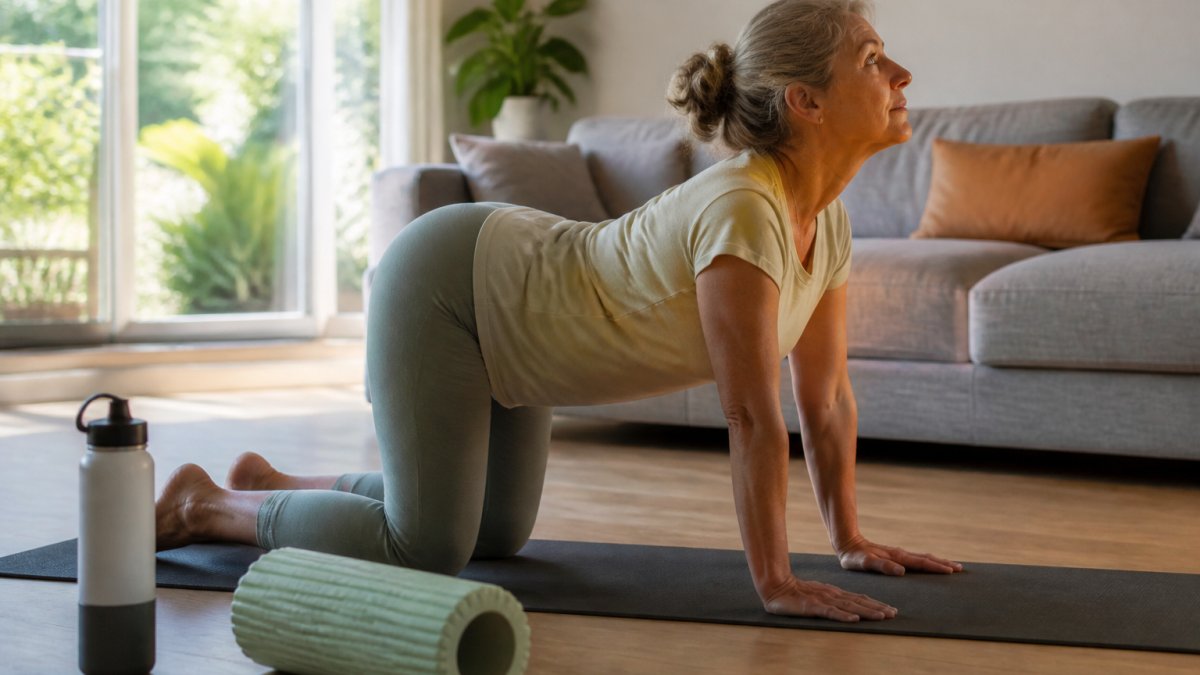
A physical therapist can tailor this ramp and check your form. If you have osteoporosis, a recent fracture, or position-dependent pain, get assessed first.
Heat or Ice for Back Pain: Which One and When
Heat or ice for back pain comes down to timing: ice for the first 48 hours after a flare to calm swelling, then heat to relax tight muscles and improve mobility.
SCHEDULE A FREE CONSULTATION →
| Treatment | Best For | How to Apply |
|---|---|---|
| Ice pack | New flare, swelling | 15-20 minutes, wrapped in cloth |
| Heat | Stiff, tight muscles | 15-20 minutes, hot-water bottle or warm pack |
| Massage therapy | Muscle tension | Gentle pressure, short sessions |
Never apply ice or heat directly to bare skin, and skip heat on numb areas.
Natural Supplements for Back Pain and Everyday Habits That Help
Supplements are where hype outruns evidence: a few are worth discussing with a clinician, several are unproven, and some carry real interaction risks.
Evidence-graded supplement and diet options
- Stronger evidence (within a broader plan): an anti-inflammatory eating pattern (vegetables, fruit, whole grains, legumes, fish, olive oil, nuts) is linked to better pain and function generally, though not a back-pain cure. Correcting a documented vitamin D deficiency is reasonable; routine high-dose vitamin D without deficiency is not well supported.
- Limited or mixed evidence: magnesium, omega-3 fish oil, turmeric/curcumin, and devil’s claw. Give any a 6-8 week trial and track whether it changes pain interference.
- Little to no reliable evidence: glucosamine and chondroitin, most “joint support” blends, and topical creams marketed as natural pain cures.
Supplements are not risk-free. Turmeric and fish oil can increase bleeding risk, especially with blood thinners. Magnesium can interact with some antibiotics and kidney medications. St. John’s wort interacts with many prescriptions, including antidepressants. Tell your pharmacist about everything you take, including herbals, before starting.
Everyday habits that carry real weight
- How to sit with lower back pain: feet flat, hips at or slightly above knee level, screen at eye level, and stand every 30 minutes. People usually sit too long, not “wrong.”
- Weight and load: even modest weight loss reduces spinal load and improves function. Aim for gradual change, not crash dieting.
- Sleep: poor sleep amplifies pain perception. Keep a consistent schedule and talk to a clinician if pain repeatedly wakes you.
- Mindfulness and breathing: 5-10 minutes of slow breathing or a guided body scan daily can lower pain-related distress, a coping tool, not a cure.
- Hands-on therapies: massage and gentle manual therapy ease muscle tension briefly; they work best as an adjunct to exercise.
How to track whether any of this is working
Pick two or three measures and check them weekly:
- Pain interference: how much pain got in the way of work, sleep, or family time (0-10).
- Activity tolerance: minutes walked or time standing before pain forces a break.
- Sleep quality: nights per week you slept through or woke only briefly.
- Mobility: can you put on socks, get out of a low chair, or walk to the mailbox without a workaround?
A treatment is helping if those numbers trend right over 4-6 weeks, not if one good day feels better. If nothing changes after 6-8 weeks of consistent effort, reassess with a clinician.
Start with movement, sleep, and posture habits. Add one supplement at a time, only after checking interactions, and give it a fair 6-8 week trial with tracking. If pain is worsening, changing pattern, or coming with red-flag symptoms, stop self-managing and get evaluated.
Frequently Asked Questions
How do I know if chronic back pain is serious enough to see a doctor?
See a doctor if pain lasts more than a few weeks, wakes you at night, or comes with numbness, weakness, or tingling in your legs. Seek urgent care for loss of bladder or bowel control, unexplained weight loss, or pain after a fall. These are red flags that need a medical evaluation before you try home remedies for chronic back pain.
Is heat or ice better for chronic back pain?
For ongoing chronic back pain, heat usually helps more. A hot-water bottle or warm shower relaxes tight muscles and improves mobility before stretching. Use an ice pack for the first 48 hours after a new strain or during a pain flare. Keep sessions to 15-20 minutes and always wrap the pack in a towel to protect your skin.
Can natural supplements for back pain replace physical therapy?
No. Supplements such as turmeric or omega-3s may support pain relief, but they work best alongside movement and strengthening. A home exercise program that builds core muscles and mobility is the foundation of conservative treatment. Talk to your provider before starting any supplement, since some interact with blood thinners and other medications.
Chronic back pain rarely resolves on its own, and guessing at home remedies wastes time. At Beverly Hills Wellness Center, we build personalized plans that combine chiropractic care with advanced regenerative therapies, including EBOO, VSELs, and Bio Scalar Energies. Our team evaluates your whole health picture, not just your spine. Get started with Beverly Hills Wellness Center and schedule a free consultation to find a plan that fits your body and your goals.
